This book summary dives into David McCullough’s “The Wright Brothers”. It aims to give a clear, reliable look at the book’s focus on invention and persistence. It’s designed for readers in the United States.
The summary is among the top online book summaries. It offers depth without being too long. It’s perfect for those looking for quick summaries or a detailed analysis of “The Wright Brothers by David McCullough”.
It’s great for those who love informative summaries. You’ll get a biography summary and lessons on innovation and persistence. The article meets expectations for clear and useful content, like other book summary websites.
Key Takeaways
- Clear book summary of McCullough’s narrative and main themes.
- Balanced book analysis that links invention to persistence.
- Concise, accessible format suited to popular book summaries.
- Practical lessons for innovators and readers seeking best book summaries.
- Contextualizes the Wright brothers’ story for modern American readers.
Introduction to the Wright Brothers and Their Legacy
The Wright brothers started in a Dayton bicycle shop and changed the world. This brief intro sets the stage for their achievements. It’s for those who want to understand before reading a book summary or visiting a book summary website.
Overview of the Wright Brothers
Wilbur and Orville Wright were bicycle makers. They used their mechanical skills and careful testing to solve the problem of flight. They built gliders, designed control systems, and created lightweight engines.
Their hard work led to the first controlled, powered flights in 1903. This happened on the sand dunes of Kitty Hawk, North Carolina.
Importance of Their Invention
The brothers’ success opened a new era for transport and industry. Their invention of controlled, sustained flight changed commerce, military strategy, and global travel. The 1903 Flyer was a turning point that sped up technological progress and inspired engineers everywhere.
Historical Context
The Wrights worked in a time of fast industrial change and scientific curiosity. The late 19th and early 20th centuries saw factories grow, experiments increase, and public interest in inventions soar. Their achievements fit into a culture that valued practical ingenuity and careful record-keeping.
- Readers often prefer quick book summaries to grasp core ideas before reading full texts.
- Concise overviews on a reliable book summary website help retain context and facts.
- Demand for popular book summaries and new book summaries shows a need for accurate, accessible accounts.
David McCullough’s Approach to Biography
David McCullough combines a historian’s precision with a storyteller’s flair in his Wright brothers biography. His two Pulitzer Prizes and acclaimed books like Truman and John Adams show his skill. His work is a go-to for those seeking a detailed summary or analysis.
McCullough has spent years in archives, teaching, and sharing history with the public. He uses letters, diaries, and newspapers to bring events to life. This approach makes his biography a standout for its quality and depth, appealing to educators and readers alike.
Narrative style
His writing is clear and engaging, making complex topics easy to understand. He balances technical details with personal stories. This makes his book a great choice for those interested in the Wright brothers’ journey.
Research methodology
- Primary sources: letters, diaries, and archives shape the story.
- Technical synthesis: he explains complex engineering in simple terms.
- Cultural framing: he adds context from newspapers and others to broaden the view.
McCullough’s biography is often recommended on top book summary sites. His blend of thorough research and engaging writing creates summaries that honor the original while meeting readers’ needs for concise, reliable accounts.
Key Themes in “The Wright Brothers”
David McCullough explores the Wright brothers’ journey through several key themes. These include careful planning, hard work, and family support. These elements make the book a great choice for those looking for quick lessons or a detailed summary.
Innovation and Creativity
McCullough shows how the Wright brothers used bicycle technology to create their flying machine. They experimented with wing-warping and control surfaces. This method makes the story of their invention easy to understand and relatable.
Perseverance Against Adversity
The book talks about the Wright brothers’ many failures and challenges. They faced harsh weather, patent issues, and public doubt. Yet, they kept trying and improving, showing the power of determination.
Impact of Family Support
The Wright family played a big role in their success. Katharine and their parents provided emotional support and practical help. This human touch makes the story more relatable and inspiring.
- Methodical experimentation and practical invention
- Sustained effort through setbacks and skepticism
- Family roles that enabled long-term focus
The biography offers a deep dive into the Wright brothers’ story. But, a good summary or website can give you the main points quickly. Whether you prefer a detailed read or a quick summary, there’s something for everyone.
Early Life of Wilbur and Orville Wright
David McCullough paints a vivid picture of two brothers from Dayton, Ohio. Their childhood was filled with curiosity and a love for learning. They grew up in a home that valued reading, hands-on activities, and understanding how things work.
A toy helicopter from their father sparked their interest in flight. This early fascination with flying set the stage for their future inventions.
The Wrights were surrounded by mechanical toys and tools from a young age. These tools taught them patience and how to fix things. Their parents valued education but didn’t push them to get formal degrees.
Local libraries and family discussions fueled their minds. These experiences helped them develop skills in observing, sketching, and testing ideas.
Education and early interests
Wilbur and Orville didn’t finish college. Instead, they learned through work at a printing shop and a newspaper. These jobs honed their skills in precision and timing.
Later, their bicycle shop in Dayton became a place for testing and refining their ideas. It provided them with materials and a space to work on prototypes.
- The printing press taught attention to detail.
- Newspaper work sharpened problem-solving under deadlines.
- The bicycle business offered parts, clientele, and a laboratory for design.
Mccullough sees these experiences as the foundation of their methodical engineering style. The story of these autodidacts turning curiosity into disciplined experiment is compelling. For those looking for a quick overview, book summaries and online summaries are great resources. They highlight how upbringing shaped these persistent inventors.
The Evolution of Flight
David McCullough shows how the Wright brothers moved from glider tests to the 1903 Flyer. They used trials, measurements, and records to turn ideas into reality. This made their work a mix of theory and practice.
Early experiments and discoveries
Wilbur and Orville started with gliders and detailed field notes. They built wind tunnels to test lift and drag. They learned that control was key, not just power.
The role of the bicycle shop
Their bicycle shop in Dayton was more than a job. It had tools, skills, and a focus on precision. Lessons from bicycles helped them design the wings and rudder. The shop made their work practical and repeatable.
Important milestones in aviation
- Glider trials in Kitty Hawk that refined wing shapes and center of gravity.
- Development of wing-warping to achieve roll control.
- Construction and testing of the 1903 Wright Flyer with a custom propeller system.
- Iterative improvements after 1903 that led to sustained, controlled flights and early commercialization.
This part of the book is great for those looking at book summaries online. It highlights key dates, technical achievements, and the context of the Flyer’s development.
The section fits well with online summaries’ quality and depth assessments. It shows the Wright brothers’ journey of invention and perseverance.
Technological Challenges Faced
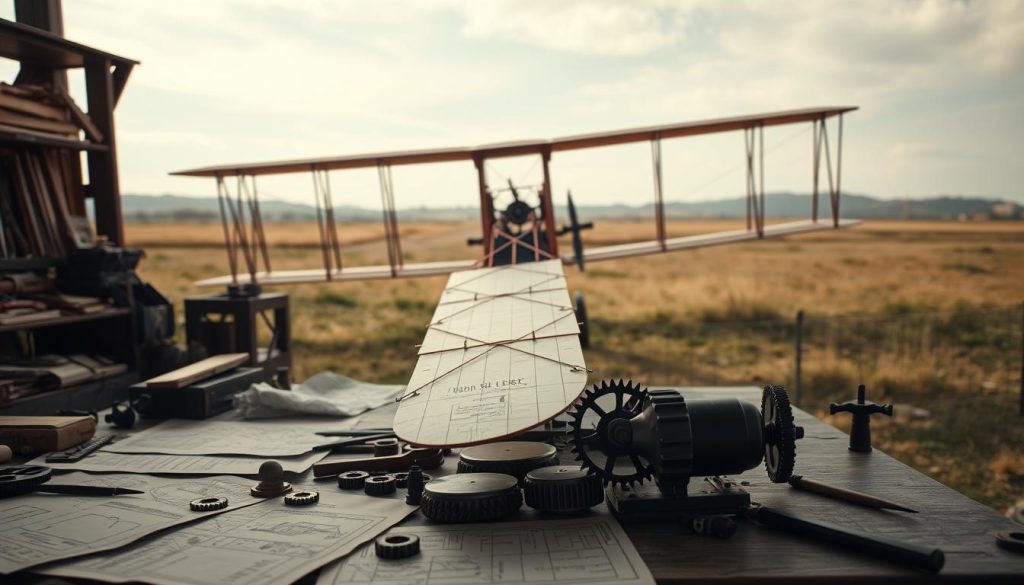
McCullough explains the technical problems the Wrights faced as they turned ideas into working machines. The story shows how hands-on testing led to design changes. It also highlights how each test provided useful data.
Early Model Designs
The Wrights built and improved many glider models. They tested wing shape, size, and control methods. They tried wing-warping and changed rudder placement, frame strength, and weight.
Each model showed small changes that helped them improve the next one.
Issues with Propulsion and Control
Existing engines and propellers didn’t work well, so the brothers made their own. They created a lightweight engine and custom propellers. Finding the right balance between thrust, weight, and control was hard.
Tests showed small changes in propeller pitch and engine weight made a big difference.
Lessons from Failure
Crashes and unexpected stalls were important learning moments. McCullough stresses how these setbacks led to new designs. The book summary approach makes these technical details easy to understand.
It shows why readers value detailed accounts. Summaries that include specific details about failures and fixes are very helpful. They keep the investigative work behind the inventions intact.
The 1903 Wright Flyer
David McCullough shows why the 1903 Wright Flyer was important. It combined observation, engineering, and testing. A book summary or analysis gives a quick look at how it worked on Kitty Hawk’s sands.
Design Features and Innovations
The Flyer had a biplane design with a wooden frame and fabric. The Wright brothers used wing-warping and a forward elevator for control. Their gasoline engine powered hand-carved propellers.
McCullough talks about their trial-and-error approach. They tested lift and drag, changed wing shapes, and adjusted control cables. This shows the Flyer as a complex system, not just a device.
The Historic First Flight
On December 17, 1903, Orville flew the first powered, controlled flight at Kitty Hawk. The first try was short but successful. Later, Wilbur made a longer flight.
McCullough lists the four flights, their times, and distances. This shows how the Wrights improved in one day. It’s not just a single story but a series of achievements.
Reactions from the Public and Press
At first, the press was skeptical. Local papers reported, but the nation was slow to notice. As disputes and demonstrations followed, interest grew.
The story shows how opinions changed over time. Online summaries and other resources often mention McCullough. They explain that recognition came slowly, needing more than one flight.
The Growth of the Aviation Industry
David McCullough explores how the Wright brothers went from private experiments to industry leaders. He shows how invention, commerce, and policy interacted. Patents, deals, and cautious displays led to wider recognition.
Competition and Recognition
McCullough talks about patent battles after the 1903 flights. The Wrights faced legal challenges from Glenn Curtiss and others. These disputes affected licensing and slowed collaboration for years.
They negotiated with investors and governments, showing their business skills. Their careful demonstrations helped establish their place in history. Military interest and foreign offers increased their visibility.
Influence on Future Aviation Pioneers
The book shows how the Wrights’ work helped future designers and engineers. Their innovations in wing-warping and lightweight engines influenced later breakthroughs. These advancements were key in military and commercial flight.
McCullough links the Wrights’ personal stories to industry trends. This connection makes readers want to dive deeper. Many look for a quick summary or visit top book summary websites.
- Technical legacy: principles of control and stability moved into aircraft design schools.
- Commercial legacy: patents and contracts shaped early manufacturers and carriers.
- Cultural legacy: inventors and entrepreneurs used Wright methods as a model.
The story is appealing for those who like quick overviews. It often appears with popular book summaries and on reliable book summary websites. Readers seek context before diving deeper.
Family Dynamics and Their Influence

David McCullough tells the Wrights’ story as more than just tech. He shows how family roles and steady relationships helped their work and public life. A book summary will reveal the human side as important as the tech details.
The Role of Their Sister, Katharine
Katharine Wright was key to keeping family life stable. She offered emotional support, was an intellectual sounding board, and handled social duties. McCullough says her advocacy helped introduce the Wrights to patrons and the press. Her steady presence is often highlighted in new book summaries for its practical impact on their inventions.
Collaboration and Teamwork
Wilbur and Orville divided tasks clearly. One focused on analysis, the other on mechanical experiments. Their routine mixed careful measurement with hands-on adjustment. This method sped up learning and reduced mistakes.
- The brothers exchanged ideas freely and tested assumptions together.
- They kept records that let them compare results and refine designs.
- Respect for each other’s judgment kept disputes from derailing progress.
McCullough balances tech chapters with personal portraits. Readers will see themes like steady support networks and clear role division as keys to success. A reliable book summary website will highlight these takeaways for those looking for lessons on teamwork.
The Legacy of the Wright Brothers
David McCullough sees the Wright brothers’ work as more than just an invention. Their experiments set new standards in flying and shaped engineering schools. Book summaries and websites highlight these points, showing their lasting impact on flying.
Long-term Impact on Aviation
The Wrights introduced key ideas in flying, like control and lift. These ideas moved from their workshop to classrooms and factories. They helped start the growth of aircraft making.
Their work also influenced the military, commercial, and civil aviation. This is shown in the biography, making it valuable for those looking for detailed summaries.
Memorials and Honors
After their first flights, the Wrights received public recognition. The 1903 Flyer is now in the Smithsonian National Air and Space Museum. Dayton and Kitty Hawk have monuments and museums to honor them.
McCullough connects these honors to American identity and global progress. Short summaries on the best book sites capture the Wrights’ inspiring story.
McCullough’s Insights on Determination
David McCullough shows how the Wrights made steady practice lead to progress. He uses short, vivid passages to highlight their methodical testing and quiet persistence. These excerpts are perfect for book summaries, giving readers practical takeaways without needing to read every chapter.
Quotes and Passages
McCullough picks lines that focus on work habits and temperament. He shares diary notes, workshop records, and letters that show the brothers’ dedication to data and craft. Readers will find memorable phrases about testing wings and treating failure as feedback.
Lessons Learned from the Wright Brothers’ Journey
The biography offers actionable lessons for today’s readers. It teaches the importance of systematic testing, careful measurement, and documenting results. It also praises resilience and the value of hands-on craftsmanship.
It shows how teamwork, like that between Wilbur, Orville, and Katharine, speeds up progress. These lessons make the story useful for those looking for quick insights on top book summary websites. A short, focused summary can provide practical steps like designing small tests and keeping precise records.
Readers who prefer quick summaries will find value in McCullough’s chosen passages. They preserve the tone and method while delivering key lessons. This balance makes summaries brief yet useful.
Conclusion: The Takeaway from “The Wright Brothers”
David McCullough’s biography teaches us a valuable lesson. It shows how steady effort can lead to big changes. The Wright brothers used careful experiments and patience to solve big problems.
This book analysis highlights the importance of small, repeated steps. These steps led to a major breakthrough, not just one big idea.
For those looking for a quick summary, McCullough’s story is both motivating and useful. It mixes technical details with personal stories. This makes it great for both quick learners and those who want a deeper dive into history.
Reviews on book summary websites praise the time-saving aspect. They say these summaries keep the main points without losing the essence.
For more in-depth knowledge, readers can look into full biographies and technical histories. These sources dive deeper into aerodynamics, patent fights, and early aviation business. Book summary apps and trusted catalogs offer quick summaries that enhance the full book experience.
This summary is a reliable guide for those in the United States. It shows that determination, testing, and practical invention are key. These lessons are just as important for today’s innovators.