This piece offers a brief summary and analysis of Jonathan Haidt’s The Anxious Generation. It serves as a detailed guide on adolescent anxiety, technology, and policy. It’s perfect for those who look for clear, evidence-based insights on book summaries.
The goal is to break down Haidt’s main ideas, examine the evidence he presents, and discuss both praise and criticism. We aim to provide actionable advice for parents, teachers, clinicians, and policymakers in the U.S.
Readers will learn about Haidt and his book, the data on adolescent anxiety, and the debate over social media’s impact. We’ll also explore alternative explanations and policy options. This analysis aims to offer a balanced view, helping professionals and readers understand Haidt’s contribution to mental health discussions.
Key Takeaways
- Clear, evidence-focused book summary that highlights Haidt’s main claims about youth anxiety.
- Balanced book analysis weighing social media’s role against other factors like sleep, loneliness, and school pressure.
- Practical recommendations for parents, educators, and clinicians grounded in current research.
- Contextual comparison with other popular book summaries to guide further reading.
- A concise roadmap for policymakers considering interventions on technology and youth mental health.
Overview of The Anxious Generation
Jonathan Haidt offers a concise, data-rich book summary. He explores changes in youth behavior from the mid-1990s. He links these changes to the rise of smartphones and social media, which have replaced face-to-face interactions and risk-taking.
He uses charts and indicators to show how anxiety, depression, and self-harm have increased among teens.
Key Themes in Haidt’s Work
Haidt points out four major harms: social deprivation, sleep loss, fragmented attention, and addiction from digital tech. He believes these issues, combined with overprotective parenting and a vulnerable online world, have weakened resilience. He advocates for freer, riskier childhoods to build resilience.
He also highlights gendered trends, noting a rise in distress among girls.
Target Audience and Purpose
The book aims at parents, educators, and policymakers, as well as those interested in youth mental health. Haidt offers solutions: he supports phone-free schools, limits on device use, and laws like the Kids Online Safety Act. He provides practical advice and policy suggestions.
Author’s Background and Expertise
Jonathan Haidt is a social psychologist known for The Coddling of the American Mind and founding Heterodox Academy and Let Grow. He writes on moral psychology and policy, appears in media, and shares data on Substack. Critics debate some points, but his book is a top pick for understanding youth anxiety.
Understanding Anxiety in Today’s Youth
Young people’s anxiety has become a big concern for experts. This section looks at key statistics and what might be causing it. It also talks about the impact of social media. If you want more background, check out a book summary or online summaries on Jonathan Haidt’s work.
Statistics on Anxiety Disorders
A 2022 study in Wisconsin found a big jump in youth anxiety. From 2012 to 2018, anxiety went from 34% to 44% among high school students. Girls and LGBTQ youth saw even bigger increases.
In 2023, a survey of college students showed 37% felt anxious often. Another 31% felt anxious half the time. Hospital visits for self-harm among girls aged 10–14 went up from 100 per 100,000 in 2010 to 300 per 100,000 in 2015.
Studies worldwide show a rise in self-harm starting around 2011–2015. Suicide rates vary by country and age, making the picture complex. For quick comparisons, check out book summaries or top summaries.
Factors Contributing to Rising Anxiety Levels
Experts say many things contribute to anxiety, not just one thing. Better reporting and expanded diagnostic practices play a role. Economic and societal stress also add to the pressure.
Things like college admissions, climate anxiety, and school shootings are mentioned. So is the impact of the pandemic. Changes in parenting styles, like more protection online, are also discussed.
Haidt talks about overprotection in real life and underprotection online. Others suggest overdiagnosis or a loss of meaning. Critics say correlation doesn’t mean causation. For more on this, see free or online book summaries.
The Role of Social Media
Haidt links smartphone adoption after 2011 with rising anxiety and self-harm. Instagram, Snapchat, and TikTok became popular around then. He calls this “the great rewiring.”
Studies show a link between social media and anxiety, but it’s not clear-cut. Some studies find a small link for girls, around r = 0.15–0.20. Others, like Orben and Przybylski, find a much smaller association, sometimes below r = 0.04.
Experts say online experiences vary. Social media can offer support and resources, like for LGBTQ and neurodivergent youth. It also played a role during COVID-19. The data show uneven trends, with some regions seeing plateaus or declines after 2015.
For a quick overview, check out top or free book summaries. They provide a concise look at the debates without replacing the original studies.
The Historical Context of Anxiety
The chapter explores how anxiety has grown over time. It avoids making simple causes for this rise. It uses data, cultural analysis, and medical insights to show how young people’s well-being changed from the 1990s to the 2020s.
Comparison with previous generations
Jonathan Haidt and Jean Twenge found that anxiety and self-harm rose sharply in the 2010s. They link this to changes in daily life and social interactions. Critics say calling a whole generation anxious oversimplifies complex issues.
Societal changes over time
The text points out several big changes: economic uncertainty, more advertising, higher school pressure, and worries about safety. It also talks about how parenting has changed, becoming more cautious and supervised.
- More talk about mental health and changes in how we diagnose can make people report anxiety more.
- Less local support for young people might come from fewer community places.
- Discussions about safety influence how parents and schools act.
Impact of technology on mental health
The book places smartphones and social media in a history of anxiety about new technology. It notes past worries about TV and video games. But today’s digital world offers constant comparison and connection.
- Smartphones became common fast: by the mid-2010s, most teens had one; by the early 2020s, almost all in the U.S. did.
- Changes in how we live—later bedtimes, less face-to-face time, more online friends—came with these tech changes.
- Studies from different countries show tech’s role, but it’s not the only factor.
This section is great for those looking for a quick summary. It’s perfect for those who want a brief overview. It’s detailed and accurate, like the best summaries out there.
Psychological Theories Explored
This section looks at three psychological theories Jonathan Haidt uses to understand why young people are more anxious. It connects these theories to everyday life, school, and family decisions. For those looking for quick info, book summaries and online resources are great for references.
Cognitive behavioral theory sees anxiety as a result of biased thinking, avoiding problems, and focusing too much on certain things. Haidt talks about how digital life makes us compare ourselves too much and think the worst. He suggests changing our thoughts and taking action to break these cycles.
Attachment theory is about the early bond between a child and their caregivers and how it shapes emotional control. Haidt links overprotective parenting to less independence in kids. This can make them more anxious and dependent, making it hard to handle stress online. Secure attachment is key to building resilience, as free book summaries often point out.
Exposure therapy helps people face their fears in small steps to reduce fear. Haidt believes in taking calculated risks and building strength. He suggests letting kids take small risks and solve real problems to build their confidence. A book summary service can guide educators and parents to safe, effective exercises.
Haidt often mixes these theories to explain how digital life weakens social skills and resilience. Critics want more proof that these ideas really work on a big scale. For those using online book summaries or a book summary service, it’s easy to compare Haidt’s views with scientific studies.
The Impact of Parenting Styles
How parents raise their kids affects how they deal with stress, take risks, and interact with friends. Jonathan Haidt looks at different parenting methods and their effects on young people. He compares strict monitoring with letting kids have more freedom, sparking debates.
Helicopter parenting means being very involved and controlling. Haidt says this can stop kids from learning to solve problems on their own. Critics say it can make kids more likely to act out or withdraw.
Free-range parenting is about giving kids more freedom and letting them learn from their mistakes. Groups like Let Grow support this approach. They believe it helps kids become more resilient and socially skilled.
Overprotection and its consequences talk about a culture that tries too hard to keep kids safe. Haidt says this can make kids too anxious and less able to handle real-life situations. Some suggest rules like no phones in school, but others worry about how well these work.
- Studies show mixed results on whether certain approaches really help kids become more resilient.
- Setting clear rules can help, but it depends on how well they are followed and the challenges kids face.
- Haidt sees a big choice between keeping kids safe in the short term and helping them grow in the long term.
This debate is common in many book summaries and analyses. It’s a key topic in discussions about youth anxiety and development.
The Role of Educational Institutions
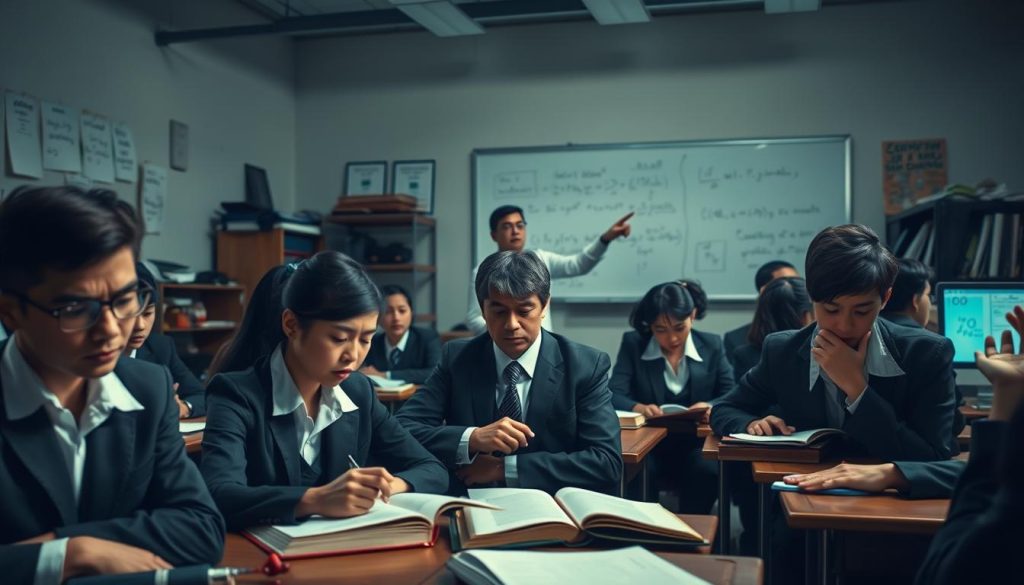
Schools play a big role in how kids deal with stress. They are places where phones, friends, and counseling services affect anxiety. Jonathan Haidt suggests making changes to reduce stress without losing focus in class.
School Environment and Anxiety
Haidt thinks schools should be phone-free to reduce distractions and comparisons. Some schools have tried this and seen mixed results. Success depends on clear rules, teacher support, and fun activities instead of screens.
Some say bans don’t work unless enforced well. Schools that focus on learning and limit phones see better focus and less anxiety. Books and online services often discuss these policies and school reforms.
Bullying and Peer Pressure
Digital spaces make bullying worse with group chats and public shaming. Haidt says this leads to more stress and self-harm in teens.
Schools are trying to fight bullying with programs and justice systems. Training staff and teaching students about media is key. Online resources can help teachers find useful summaries and guides.
Programs for Mental Health Support
Haidt and others push for more mental health services in schools. They want screenings and lessons on resilience. They suggest treatments like cognitive behavioral therapy.
Some worry about too much therapy and labeling normal teen feelings as problems. Schools aim to teach coping skills and media literacy. They also connect students with professionals when needed. Online resources can help make training affordable and effective.
Lawmakers and school leaders are figuring out how to protect kids online and in school. A good approach combines phone rules, anti-bullying efforts, and mental health support. This way, schools can meet real needs without over-labeling.
The Influence of Culture and Society
How youth view anxiety is shaped by public talks about it. Media like The New York Times and interviews with Ezra Klein brought Jonathan Haidt’s ideas to many homes. This attention raised awareness but also sparked debates on causes and solutions.
Media representation of mental health can make seeking help seem normal or push sensational stories. News and viral content often make trends seem urgent. This changes how families, schools, and policymakers react.
Social media and influencer culture also shape emotional responses. They set expectations for how we should feel and act.
Reporting changes and falling stigma affect how we see anxiety. More young people now report feeling anxious than in the past. This shift makes it hard to compare rates accurately.
Haidt talks about changes in diagnosis and reporting in his work. Critics say rising self-reports might also come from less stigma. These debates are often covered in top book summaries and popular book summaries for busy readers.
Cultural stigma surrounding anxiety varies by community. It affects whether young people seek help. In places where mental health is stigmatized, symptoms are hidden. But where it’s discussed openly, more young people seek help early.
Public policy and political debates shape what interventions are possible. Polarization and controversies over school rules and platform regulation influence what gets implemented. These debates decide whether laws or school programs are put into action.
Political trends also influence parenting and education policies. Commentators note differences in global suicide and self-harm rates. They suggest many factors, not just technology, are at play. Readers looking for reliable book summaries or browsing through summaries of books may find different views and evidence.
Discussions about mental health often spill into civic debates. Debates over parental rights, platform responsibility, and freedom of expression shape possible solutions. Media and policy together guide which ideas make it into top book summaries and popular book summaries aimed at shaping public opinion.
Strategies for Coping with Anxiety

Young people can manage anxiety by taking practical steps. These steps don’t simplify complex issues. Instead, they combine evidence-based treatments with daily habits that help regain control and cut down on digital distractions.
Looking at a book summary or online summaries can offer quick advice. You’ll find information on CBT and exposure therapy. You’ll also learn about the dangers of over-medicalizing problems.
Therapeutic approaches
Proven treatments include cognitive behavioral therapy and exposure therapy. These methods help change negative thoughts, reduce avoidance, and build coping skills. Haidt suggests combining these therapies with real-world learning, not just medication or trends.
Mindfulness and meditation
Mindfulness can improve focus and reduce worries caused by too much screen time. Simple breathing exercises and body scans can be taught in schools. They work best when combined with behavioral strategies and support from adults who stay focused.
Building resilience in youth
Resilience grows through facing challenges, playing freely, and solving problems on your own. Parents can delay giving phones to kids and set clear rules to reduce digital addiction. Schools can also help by banning phones, teaching media literacy, and providing mentorship.
Short guides and free book summaries can help caregivers and teachers quickly learn these strategies. A good book summary service or online summaries offer key points. These points support planning for therapy, school programs, or family routines.
Community and Support Systems
Strong community ties help youth manage anxiety by blending practical routines with emotional support. Readers who visit a book summary website often find concise takeaways about these approaches. Jonathan Haidt stresses parents should set clear limits while encouraging independence.
Family Support Dynamics
Collaborative rule-setting works better than strict control. Research warns that authoritarian tactics can increase anxiety. Families that agree on phone curfews, protect sleep, and allow supervised free play build trust and resilience.
Practical steps include predictable routines and calm conversations about limits. Modeling self-regulation helps children learn emotional tools. Parents who balance guidance with freedom reduce the need for crisis interventions.
Peer Support Groups
Peer-led groups and school clubs create belonging for marginalized youth. Moderated online communities can be lifelines for LGBTQ and neurodivergent teens when rules protect members from harm.
Structured peer support pairs connection with safety. Schools that sponsor trained student facilitators expand access to help. Readers who consult popular book summaries will see real-world examples of these models.
Professional Mental Health Services
Access to licensed therapists and school counselors remains essential. Evidence-based care such as cognitive behavioral therapy and exposure therapy should be prioritized for effectiveness.
Systemic barriers include workforce shortages and unequal access. Policy efforts that fund school mental health staff and set telehealth quality standards can close gaps. Summaries of books and top book summaries often highlight studies that back these policy moves.
Haidt links prevention through parenting and schools to the need for treatment capacity for youth already in distress. Practical plans combine family routines, peer supports, and clinical care to form a resilient safety net.
Conclusion: Looking Forward
Public awareness of teen mental health has grown. Ongoing research will shape how we respond. We need strong studies and clear data to help make good choices.
The Future of Mental Health Awareness
We should look at social media’s different parts, not just as one thing. It’s important to figure out what causes problems. This will help us make better rules and programs for schools and communities.
Recommendations for Parents and Educators
There are practical steps we can take. Delay when teens get their phones, have phone-free zones in schools, and teach them about sleep and media. Talk to teens about rules and teach teachers and counselors too. Make sure mental health help is easy to find.
Final Thoughts on Haidt’s Contributions
Jonathan Haidt’s book, The Anxious Generation, brought important data and ideas into the conversation. It challenges us to take action. It’s about finding ways to make things better and getting parents involved.
But, it’s also important to remember its limitations. It’s based on some correlations and doesn’t always show the full picture. Use this summary with other studies and advice before making big decisions. This summary is a helpful resource for understanding the book and its ideas.